Plan your Visit to Borobudur Temple
Borobudur Temple is a UNESCO-listed Buddhist monument best known for its massive stone terraces, bell-shaped stupas, and sunrise silhouettes over Central Java. The visit feels more managed than many first-timers expect, because the biggest decision is not whether to go, but whether your ticket only gets you into the grounds or actually onto the monument. Time, ticket type, and arrival window matter here. This guide helps you choose the right access, timing, and route before you go.
Quick overview: Borobudur Temple at a glance
Borobudur rewards planning more than spontaneity, especially if climbing the monument matters to you.
- When to visit: Standard monument-climb sessions run during the day, with separate 4 am sunrise and 4 pm sunset products; the first daytime climb slot is noticeably calmer than midday because the stone is cooler and the guided batches have not stacked up yet.
- Getting in: From IDR 455,000 for monument climb access, with sunrise/sunset products from IDR 1,000,000; book ahead if you want to go onto the structure, because grounds access and monument access are sold separately and special-time slots are tightly capped.
- How long to allow: 2–3 hours works for most self-arranged visits, while sunrise, sunset, or a Yogyakarta-based transfer tour can easily turn the outing into a half-day or full-day plan.
- What most people miss: The real decision is grounds-only versus structure access, and many visitors do not realize until too late that the lower relief experience is shorter than the iconic upper stupa terraces.
- Is a guide worth it? Yes for the climb, because official structure access already runs with a guide, but a generic extra 'guided' upsell is only worth paying for if it also improves transport or gives you a private pace.
🎟️ Tickets for Borobudur Temple structure climbs and sunrise slots sell out days in advance during holiday periods and Waisak. Lock in your visit before the time you want is gone.
Jump to what you need
🕒 Where and when to go
🗓️ How much time do you need?
🎟️ Which ticket is right for you?
🗺️ Getting around
🛕 What to see
♿ Facilities and accessibility
Arrive after 4pm and you cannot join a monument climb, even if you booked climb access, because late arrivals are switched to grounds-only entry.
Where and when to go

How do you get to Borobudur Temple?
Borobudur sits in Magelang Regency, northwest of Yogyakarta, and most visitors arrive by private driver or bundled transfer rather than city transit.
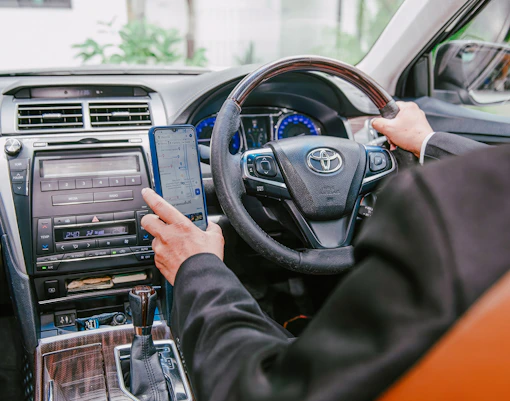
- Private car/driver: Borobudur Temple → direct drop-off in the visitor zone → easiest option if you are coming from Yogyakarta.
- Tour transfer: Yogyakarta hotel pick-up → direct arrival at the processing area → simplest option if you want transport and ticket timing handled together.
- Taxi/rideshare: Borobudur visitor entrance → short walk to validation → useful if you want flexibility but do not want to self-drive.
Getting here from nearby cities
Borobudur works best as a regional day trip, with Yogyakarta as the easiest base and Central Java cities as longer but workable starts.
From Yogyakarta
- Distance: 40 km
- Travel time: 1–1.5 hours via private car, driver, or shared tour
- Time to budget: Leaves enough room for a sunrise, standard climb, or Borobudur plus Prambanan pairing in one long day
From Semarang
- Distance: 90 km
- Travel time: 2–2.5 hours via car or private transfer
- Time to budget: Better as a dedicated Borobudur day rather than a rushed multi-stop plan
From Surakarta (Solo)
- Distance: 95 km
- Travel time: 2–2.5 hours via car or private transfer
- Time to budget: Works best if you leave early and treat Borobudur as the anchor stop
Which entrance should you use?
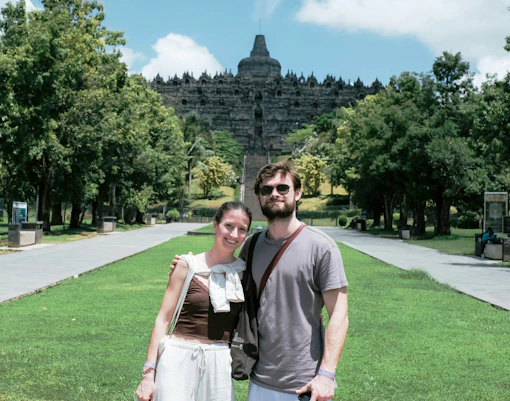
Borobudur is not just a simple walk-up gate. Standard visitors enter through the main visitor flow, while a few special products use a different reporting point.
- Main visitor entrance: Located in the Borobudur visitor park. Best for grounds tickets, standard structure tickets, and most transfer tours. Expect the longest waits around holiday mornings and sold-out climb slots.
- Manohara Borobudur Cultural Center Gate 7: Best for ticket-only sunrise visitors when your booking specifically tells you to report there. Expect early processing before the 4 am start.
When is Borobudur Temple open?
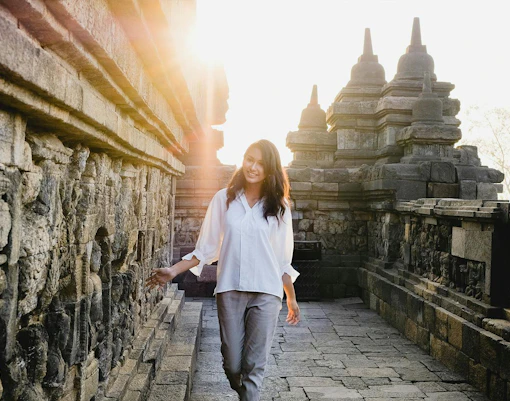
- Daily: Standard monument-climb sessions run from 8:30 am–5 pm
- Daily: Sunrise experience starts at 4 am
- Daily: Sunset experience starts at 4 pm
- Last climb check-in: 4 pm
When is it busiest? Waisak season, year-end holidays, and early sold-out climb windows are the most pressured periods, especially when visitors are trying to secure monument access rather than grounds-only entry.
When should you actually go? The first daytime climb slot, sunrise, or sunset works best because you get cooler conditions and a smoother start before midday heat flattens the experience.
You will want around 2–3 hours for a self-arranged Borobudur visit if you are entering the grounds and joining one timed monument climb. Sunrise and sunset visits take longer, and a Yogyakarta-based day tour can turn the visit into a half-day or full-day outing.
Which Borobudur Temple ticket is best for you
| Ticket type | What's included | Best for | Price range |
|---|---|---|---|
Borobudur Temple Tickets | Admission + temple grounds/courtyard or monument climb access + licensed Borobudur Temple guide on selected options + timed monument entry on selected options + fast-track entry on selected options | A self-planned visit where the real question is whether you want a cheaper grounds visit or guaranteed access onto the monument itself | From IDR 455,000 |
Borobudur Temple Tours | Borobudur Temple ticket + licensed Borobudur Temple guide + English-speaking driver on selected options + shared/private transfers on selected options + breakfast and flashlight on sunrise options | A visit from Yogyakarta where you want the climb logistics handled and do not want to coordinate tickets and road transfers separately | From IDR 1,000,000 |
⚠️ Watch out for unofficial sellers. Street vendors and kiosks near Borobudur Temple often sell overpriced or invalid tickets. Buy only through the official site or a verified partner — an invalid ticket means joining the longest queue anyway, with no recourse.
How do you get around Borobudur Temple?
Borobudur is best explored on foot once you clear the visitor park, and the structure climb itself is short enough to pair with time in the grounds without feeling overwhelming. The monument is the obvious focal point of the whole site, so the real navigation challenge is not finding Borobudur, but understanding where your timed climb processing begins.
Getting around the site
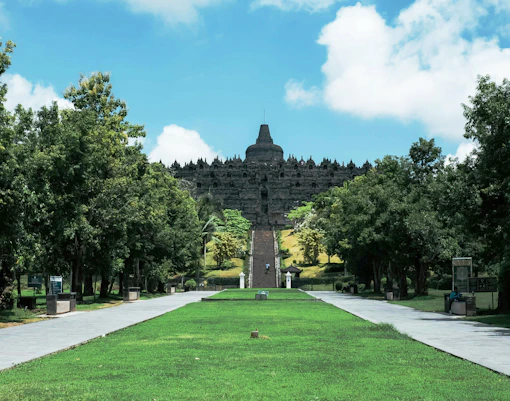
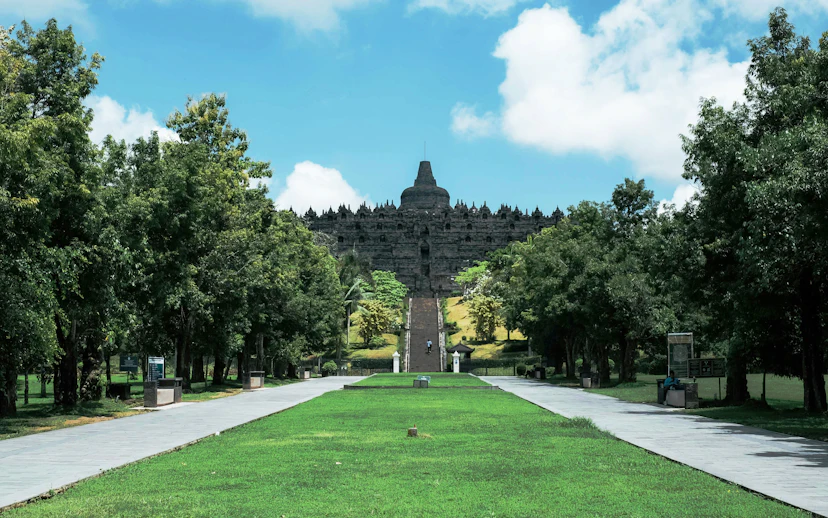
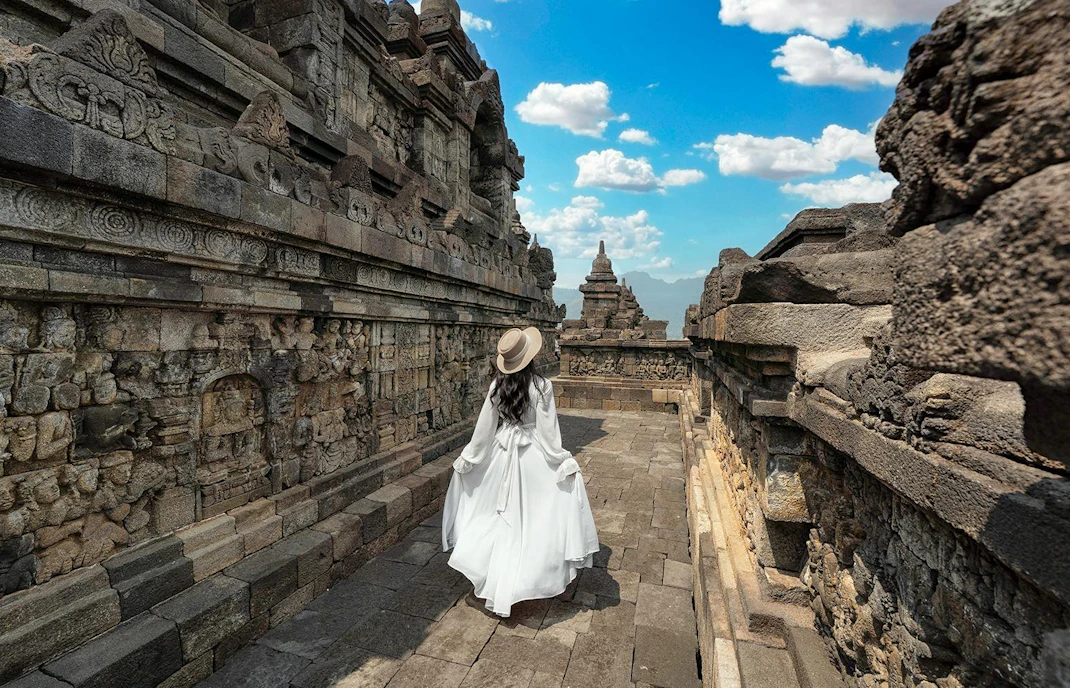
- Grounds approach: First full view of the monument and the best place to get your bearings before the formal climb starts → allow 15–30 min.
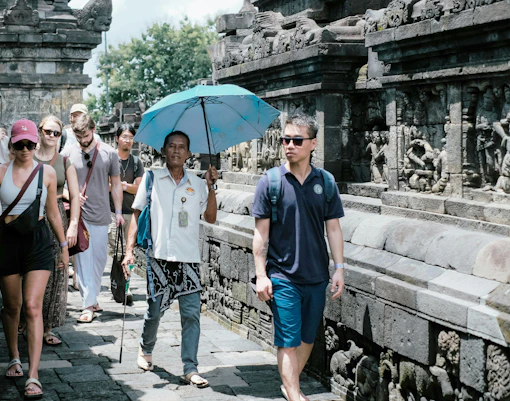
- Lower terraces: Early guide stops and relief context before the upper section opens out → allow 20–30 min.
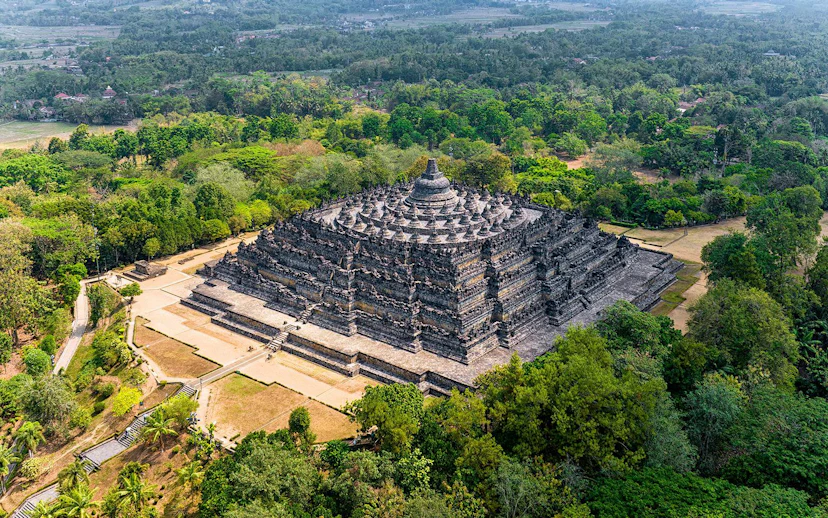
- Circular upper terraces: The biggest scenic payoff, with the stupa field and the most open sense of scale → allow 20–30 min.
- Exit and hospitality zone: Where special-time products fold into breakfast or dinner and standard visits naturally slow down again → allow 15–30 min.
Suggested route: Take your first monument photos on the approach, stay with the guide through the lower interpretive section, and save your real pause for the circular upper terraces, because that is where Borobudur feels largest and where rushed visitors most regret not slowing down.

Maps and navigation tools
- Map: On-site orientation boards and staff flow cover the basics, but save an offline map pin before arrival if you are coming independently from Yogyakarta.
- Signage: Grounds signage is straightforward, but structure-ticket visitors still move through a staff-managed validation and guide system rather than true self-navigation.
- Audio guide / app: Official structure access already includes a guide, so a separate audio layer adds less value here than it would at a free-roam site.
💡 Pro tip: Do not treat the validation zone as dead time — that is where late arrivals lose the most momentum, especially on the last climb slots.
What are the most significant spaces in Borobudur Temple?
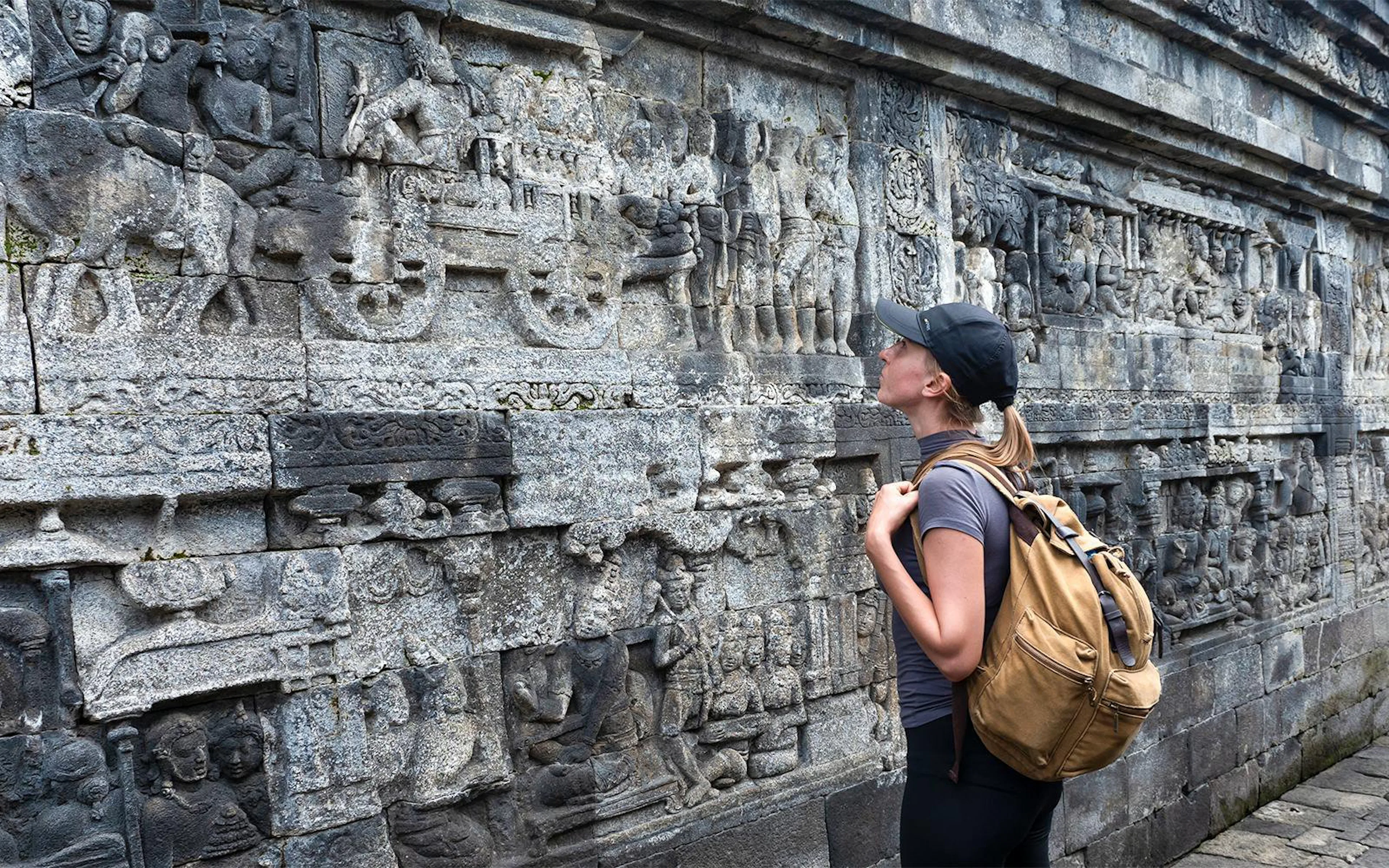
Relief galleries
Era: 8th–9th century Buddhist narrative carvings
The lower galleries are where Borobudur shifts from a giant silhouette into a story-rich monument. This is where the carved relief panels give the temple its historical depth, but many visitors move through this section too quickly because the iconic photo reward comes later. If you care about the monument as more than a skyline, pay attention here before the group moves upward.
Where to find it: Along the lower square terraces of the monument during the early part of the ascent route
Circular upper terraces
Architectural form: Open circular levels above the square lower base
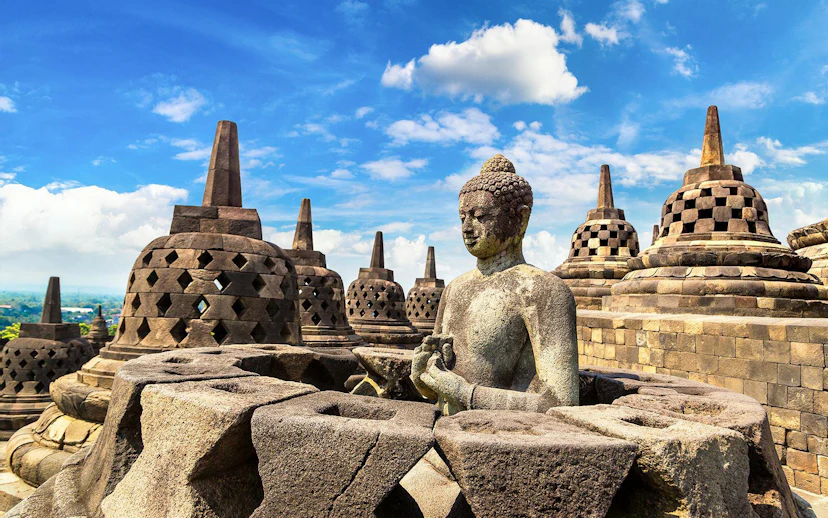
These terraces are the clearest visual turning point in the monument. The climb suddenly feels more spacious, the lines open up, and the stupa field finally matches the images most visitors came for. Many people rush straight to the nearest photo angle, but it is worth slowing down and noticing how different this zone feels from the denser lower levels.
Where to find it: At the upper accessible section of the monument after the guided lower-terrace route
Perforated stupas
Architectural feature: Bell-shaped stone stupas
The perforated stupas are Borobudur's most recognizable detail, and they are what make the upper terraces feel unmistakably different from any other temple site in the region. What most visitors miss is how the light changes through the openings as you move around them, especially early and late in the day. This is the section where controlled access feels most worth it.
Where to find it: Spread across the circular upper terraces around the summit zone
Central stupa and summit axis
Spiritual focal point: Main summit monument
The central stupa is the symbolic finish to the ascent and the point that ties the entire structure together. It is easy to treat it as just the last photo stop, but the real payoff is the surrounding perspective — from here, the monument's geometry and the wider Central Java landscape both make sense. This is the moment that tends to land strongest in person.
Where to find it: At the highest point of the accessible monument route
The upper terraces are the emotional payoff, but the lower carved galleries are where Borobudur stops being just a silhouette and starts reading as a monument with narrative depth.
Facilities and accessibility
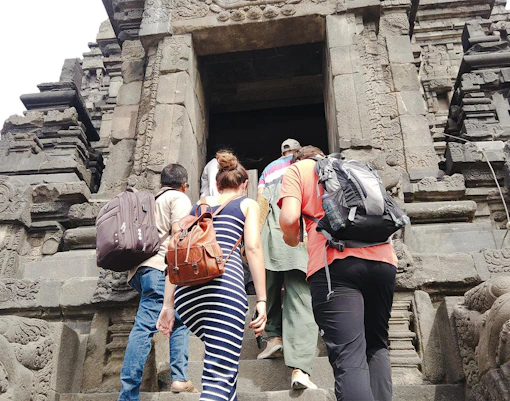
- 👟 Footwear service: Monument-climb visitors are issued the required Upanat sandals before ascent, and regular shoes come off before you go up.
- 🍽️ Restaurant: Manohara Restaurant is the verified meal point tied to official special-time products, with breakfast on sunrise bookings and dinner on sunset bookings.
- 💧 Water: Guided Borobudur Temple Tours and the Borobudur plus Prambanan day tour include mineral water, which helps in the exposed midday heat.
- 🚗 Transfers: Several Borobudur Temple Tours include hotel pick-up and drop-off from Yogyakarta, which is a practical on-the-ground service many visitors end up valuing more than an extra upsell.
- 🎟️ Timed-entry handling: Monument access includes validation, grouping, and sandal issue before you climb, so plan for a real pre-ascent process rather than a single barcode scan.
- ♿ Mobility: The monument climb is stair-based, and no verified step-free ascent solution was listed for the structure, so grounds access is the more realistic choice if stairs are difficult.
- 👁️ Visual impairments: Structure access includes a guide, which is useful if verbal explanation matters more to you than reading the site independently.
- 🧠 Cognitive and sensory needs: Sunrise, sunset, or the first daytime climb slot are the easiest options if you want a more controlled flow, because the special-time products are tightly capped and midday heat adds strain.
- 👨👩👧 Families and strollers: Strollers are workable in the grounds but not on the monument climb, where visitors change into Upanat sandals and move through a stair-based route under guide pacing.
Borobudur works best for children who can handle stairs and short guided stretches, while younger kids usually get more from the open grounds and the big reveal of the monument than from the historical explanation.
- 🕐 Time: Plan 2–3 hours if you are doing the structure climb with children, and save their energy for the upper terraces because that is the clearest payoff zone.
- 🏠 Facilities: Sunrise and sunset products are the most family-friendly formats because they bundle breakfast or dinner around a timed climb instead of leaving meals to chance.
- 💡 Engagement: Give children a simple mission — spot the shift from the square lower levels to the circular stupa terraces — so the climb feels like a build-up rather than just a staircase.
- 🎒 Logistics: Bring a hat, water, and easy-to-remove shoes, and do not cut it close to the 4 pm climb cutoff because late arrivals lose monument access.
- 📍 After your visit: Mendut Temple is the easiest nearby add-on with children because it is smaller, calmer, and easier to cover without another long climb.
Rules and restrictions

What you need to know before you go
- Structure climbs need a prebooked timed session if you want to go onto the monument, and Indonesian-resident tickets require valid ID at entry.
- Monument-climb visitors must switch into the provided Upanat sandals before ascent, so wear shoes you can remove quickly and carry only what you want on the stairs.
- Guests who arrive after 4 pm cannot join a monument climb and are moved to grounds access only, which makes the day's last slot the least forgiving one.

Not allowed
- 🚫 Food and drink are not permitted inside the temple structure, so eat before you enter or book a sunrise/sunset product that bundles a meal.
- 🚫 Pets, drones, weapons, and musical instruments are not allowed on the Borobudur visit.
- 🚫 Do not treat the monument like a free-roam platform, because the climb route is staff-managed and guide-paced from the start.

Photography
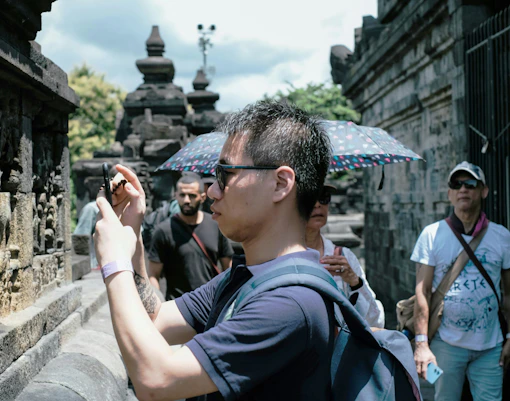
Personal photography is part of the Borobudur experience, especially on the upper terraces, but keep your setup compact because the climb is guide-paced and space tightens where people naturally stop for photos. Drone use is not allowed, and anything that blocks the ascent route will slow the group and get moved along quickly.

Good to know
- The most common mistake here is buying a grounds ticket and assuming it includes the climb — it does not.
- Sunrise and sunset are not just early or late entry times but separate capped products with only 100 places per day each.
Practical tips
- Book the climb first: If standing on the monument matters to you, lock in a structure ticket before you plan the rest of the day, because grounds access and climb access are separate products.
- Treat 4 pm as a hard cutoff: Borobudur does not give much grace on the last climb window, and late arrivals after 4 pm are switched to grounds-only access.
- Arrive earlier than feels necessary: The 30–45 min pre-arrival window is useful here because validation, grouping, and sandal issue are part of the climb experience.
- Choose the right product for your real goal: Sunrise and sunset are worth the premium for atmosphere and cooler conditions, while the standard structure ticket is the more practical choice if you just want monument access without the extra ceremony.
- Wear shoes you can swap quickly: Climb visitors must change into Upanat sandals, so lace-heavy shoes just add friction at the worst possible point in the process.
- Do not over-compress a Yogyakarta day trip: The road transfer plus timed processing means Borobudur feels much better as the anchor stop than as a rushed add-on between other bookings.
- Ignore vague 'guided' labels unless they solve a real problem: Official structure access already includes a guide, so the upgrade only matters if it improves transport, privacy, or pacing.
What else is worth visiting nearby?
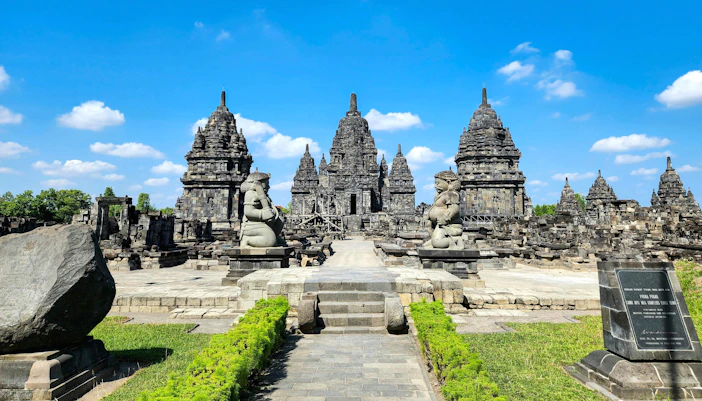
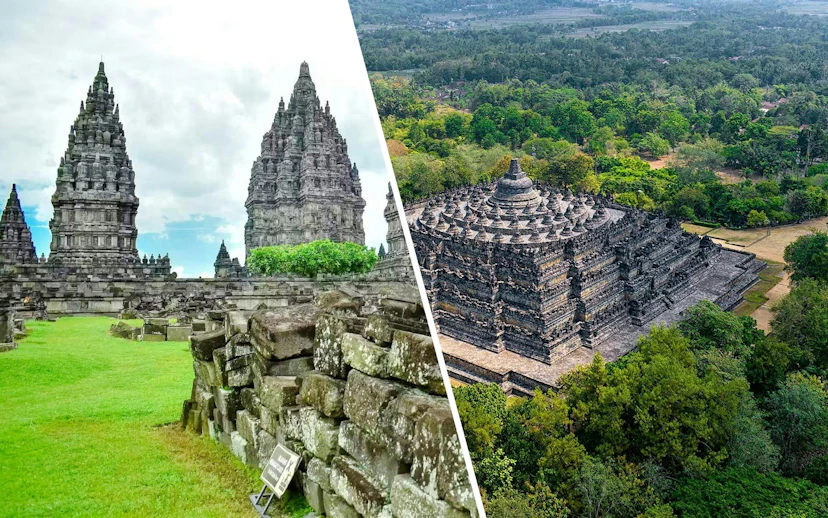
Commonly paired: Prambanan Temple
Distance: 40 km — 1–1.5 hours by road
Why people combine them: This is the classic Central Java temple pairing, because Borobudur covers the Buddhist monument experience while Prambanan gives you a very different Hindu temple complex in the same long day.
✨ Borobudur Temple and Prambanan Temple are most commonly visited together — and simplest to do on a combo tour. The big advantage is that transfers and both entry tickets are handled together, so you do not spend the day juggling separate bookings. → See combo options
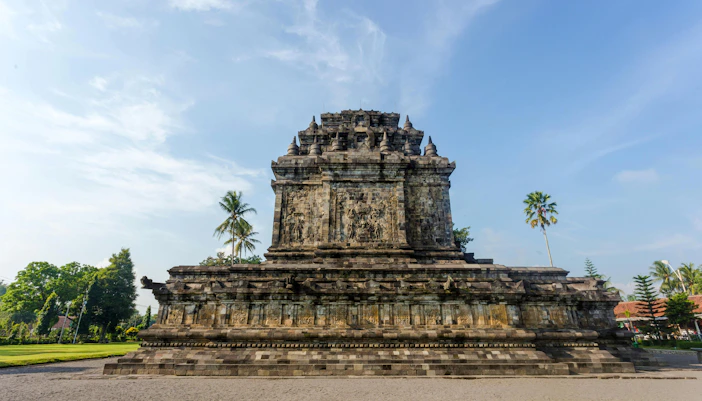
Commonly paired: Mendut Temple
Distance: 3 km — 10 min drive
Why people combine them: Mendut is a much smaller Buddhist temple stop, so it works well before or after Borobudur when you want extra context without adding another major site.
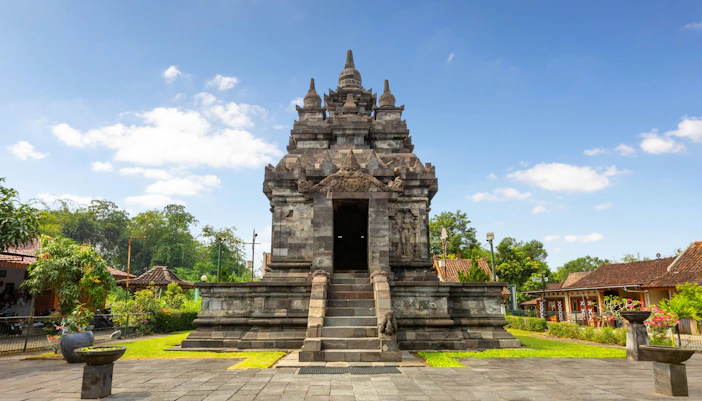
Also nearby
Pawon Temple
Distance: 1.5 km — 5 min drive
Worth knowing: Pawon is a quick stop rather than a destination in itself, but it makes sense if you want a short, easy temple add-on close to Borobudur.
Punthuk Setumbu
Distance: 5 km — 15 min drive
Worth knowing: This is a popular viewpoint for Borobudur-facing sunrise views, so it works best if you want atmosphere and landscape rather than more archaeology.
Eat, shop and stay near Borobudur Temple
- On-site: Manohara Restaurant is the clearest verified on-site dining option, and it is already built into the official sunrise breakfast and sunset dinner formats.
- Stupa Restaurant by Plataran (5-min drive, Jl. Badrawati area): A better choice if you want a proper sit-down meal after the climb rather than a quick convenience stop.
- Pawon Luwak Coffee (10-min drive, Borobudur area): Good for coffee, light food, and a shorter reset before heading back to Yogyakarta.
- Local warungs around the park exit (short walk): Best for a low-key, fast meal if your priority is value rather than atmosphere.
- 💡 Pro tip: If you are doing a standard daytime climb, eat either before your timed slot or fully after the visit — meals feel awkward in the middle because the validation and grouping window is tighter than many visitors expect.
- Manohara souvenir counter: The easiest place for small keepsakes if you want to buy something without adding another stop.
- Borobudur souvenir market: Best for temple miniatures, batik, and easy-to-pack local gifts near the visitor area.
If Borobudur is the centerpiece of your trip, one night nearby makes sense for sunrise, sunset, or a slower temple-focused day. If you are primarily city-based and want restaurants, cafés, and more flexible sightseeing, Yogyakarta is still the better base. Borobudur is quieter and more purpose-built around the monument than around broader nightlife or urban exploring.
- Price point: The area skews toward temple-stay resorts, smaller guesthouses, and countryside quiet, with more variety once you return to Yogyakarta.
- Best for: Visitors who want the least stressful sunrise or sunset logistics, or who simply do not want a long return drive immediately after a timed climb.
- Consider instead: Yogyakarta city center or Prawirotaman if you want more dining choice, easier onward transport, and a better base for a longer Central Java itinerary.
Frequently asked questions about visiting Borobudur Temple
Most self-arranged visits take around 2–3 hours if you are entering the grounds and joining one timed monument climb. That gives you enough time for validation, the footwear change, the guided ascent, and a short pause before or after. Sunrise, sunset, and Yogyakarta transfer tours naturally stretch longer.
Yes, if you want to climb the monument or book sunrise or sunset. Borobudur sells grounds access and structure access separately, and the capped special-time products are the first to tighten. Leaving it late is how many visitors end up seeing the monument from below instead of going up.
Yes, but only if the product also solves ticketing or transfer friction for you. Borobudur is still a timed, staff-managed site, so even faster-entry variants do not remove validation, grouping, sandal issue, or the guide-paced climb. The biggest benefit is certainty, not zero waiting.
Arrive 30–45 minutes before your climb session. That buffer matters because Borobudur does more than scan a ticket — structure visitors also go through validation, grouping, and the switch into Upanat sandals before the ascent begins.
A small day bag is the easiest choice here. Structure access involves a footwear change and a stair-based climb, so anything bulky becomes annoying fast even before you reach the monument. Packing light is more useful at Borobudur than at a city-center museum-style attraction.
Yes, personal photography is one of the main reasons people book structure access. The main limit you need to remember is that drone use is not allowed, and the climb route stays guide-paced, so any long stop that blocks the flow will be cut short quickly.
Yes, and official structure access is already organized in guided batches. If your group mostly needs transport solved, a transfer-included Borobudur Temple Tour is usually the cleaner fit. If your group cares about pace and privacy, private tour formats make more sense than standard shared handling.
Yes, if your children are comfortable with stairs and short guided stretches. The monument climb is not especially long, but it is structured and less free-roam than many families expect. Younger children often enjoy the open grounds and the huge reveal of the monument more than the interpretation itself.
The grounds are the more realistic option, but the structure climb itself is not a step-free experience. No verified step-free ascent solution was listed for the monument route, and the climb depends on stairs plus a guided flow.
Yes. Sunrise products include breakfast, sunset products include dinner, and nearby dining is easy enough once you leave the main visit flow. For a standard daytime climb, it is smarter to eat before your slot or properly afterward than to try forcing a meal into the middle.
A grounds ticket lets you enter the site and see Borobudur from the surrounding area, but it does not let you climb the monument. A structure ticket is the one that gets you onto the monument itself, with timed entry, guide handling, and the required Upanat sandals.
The best time is either the first daytime climb slot or one of the special sunrise or sunset products. Those windows are cooler, feel less draining, and make the monument more memorable than a late-morning or midday visit, when heat is usually the main comfort problem.