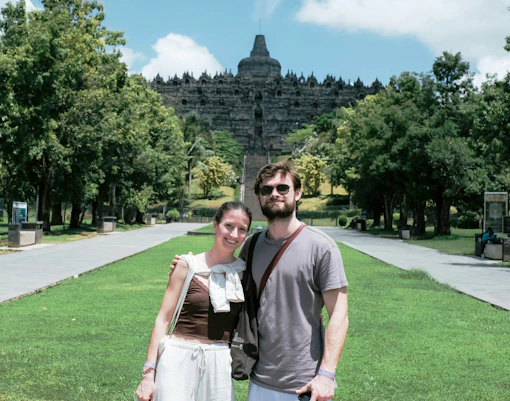
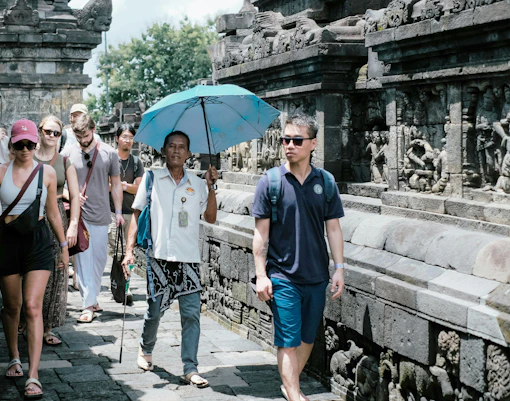
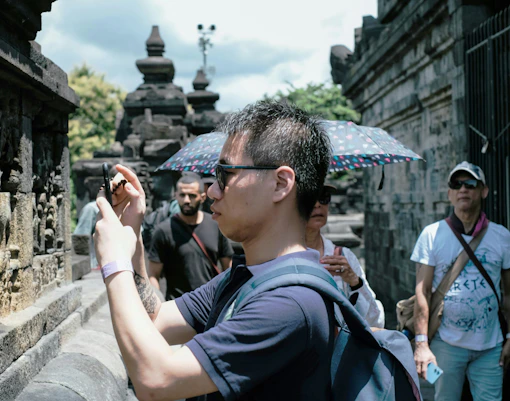
Book Borobudur Temple tickets & tours
Borobudur Temple Tickets

Super Saver Combo: Prambanan & Borobudur Temple Admission Tickets
Borobudur Temple Tours
Ultimate Temple Run: Prambanan & Borobudur Tours

The first thing that lands is not the detail, but the mass. Borobudur rises out of the plain like a worked stone hill, and as you get closer the monument keeps changing scale on you — stairs becoming terraces, terraces becoming a maze of walls, reliefs, and open sky.
It was built in the 8th and 9th centuries during the Syailendra Dynasty as a Buddhist monument meant to be experienced in movement, not just admired from a distance. That still comes through today. Even with timed access and guided pacing, the climb feels like a deliberate progression upward.
The payoff is the moment the monument opens out into circular terraces lined with bell-shaped stupas. You leave with a stronger sense of Borobudur as a landscape in stone, not just a famous photo.
Skip it if you want long, self-directed monument time or if timed group climbs and temple stairs will frustrate you.
What to see at Borobudur Temple?
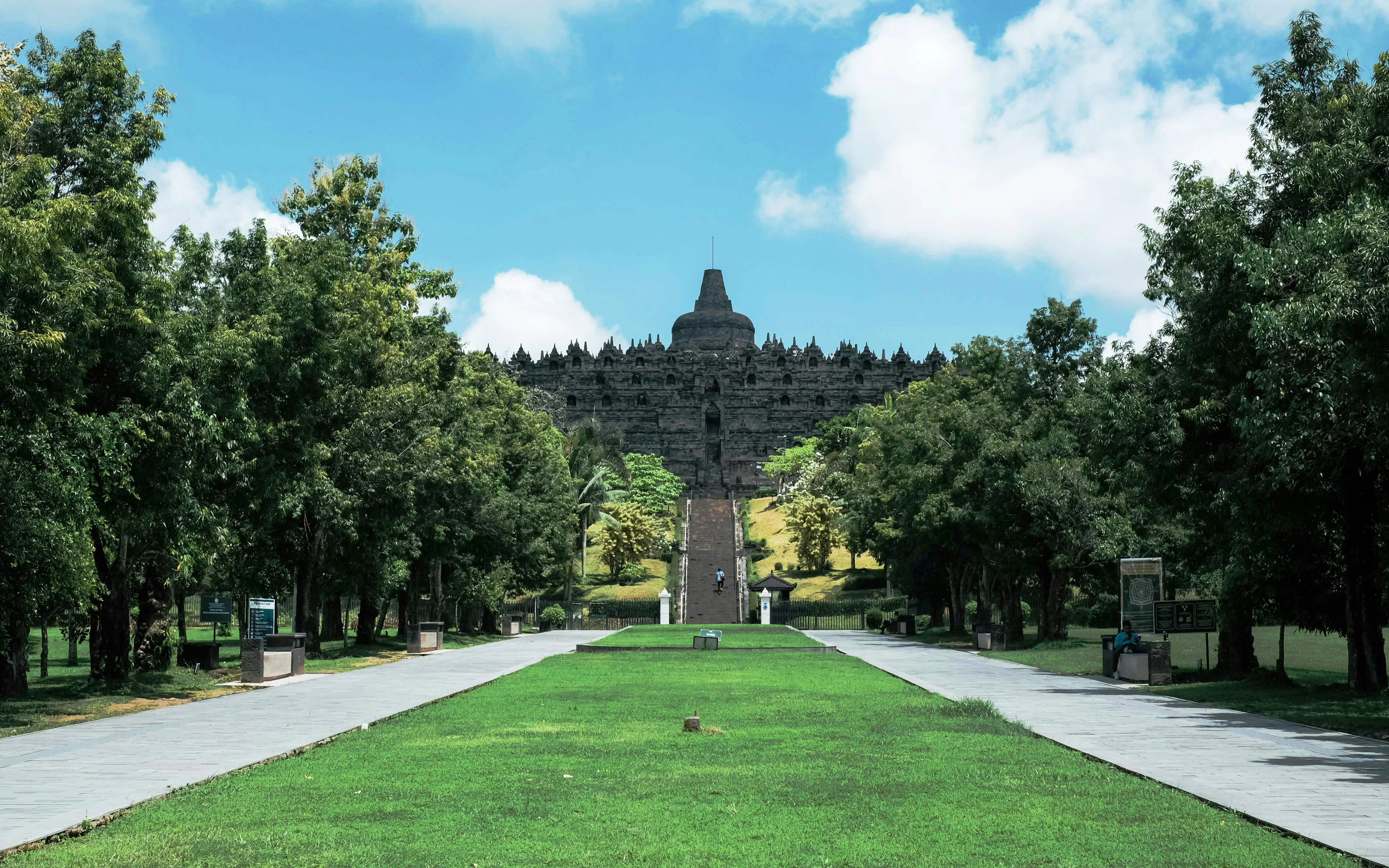
The full monument approach
From the park, Borobudur reveals itself slowly rather than all at once. That measured approach is part of the experience, and it’s where many first-time visitors finally grasp the monument’s real scale.
The lower square terraces
These broad levels establish Borobudur’s weight and geometry. On a climb ticket, this is where the visit shifts from simple sightseeing to reading the monument as a structured ritual path.
Narrative relief panels
Borobudur’s carved panels reward close looking, especially when your guide pauses along the route. Current visitor flow does not linger everywhere, so take your best look whenever you have it.
The stairways and axial views
The staircases create sharp, symmetrical lines and sudden openings toward the surrounding landscape. That contrast between enclosed stone and widening horizon is one of Borobudur’s most effective design moves.
The circular stupa terraces
This is the image most visitors came for: rows of perforated stupas against open sky. Access is timed and limited, so earlier climb sessions usually feel calmer and give you cleaner sightlines.
The central stupa and plain beyond
At the top, Borobudur stops feeling like a building and starts reading like a landmark for the whole Kedu Plain. Clear mornings give the monument its strongest sense of place.
How much time to spend?
Budget 2–2.5 hours on-site for a standard monument climb, or 60–90 minutes if you’re only visiting the grounds. If you’re coming from Yogyakarta, the day stretches fast; transfer-based visits can turn Borobudur into a 6–10 hour outing.
Best visit order
Arrive 30–45 minutes early for ticket validation, wristbanding, and Upanat sandal collection. Treat the approach walk as part of the visit, not dead time. Once your guide takes the group up, pay closest attention on the upper terraces, where the monument feels most open.
Must-see highlights
Must-see: the full approach view, the upper circular terraces, the bell-shaped stupas, and the central stupa outlook. Optional: a sunrise visit or a same-day Prambanan pairing, which adds either a very early start or most of another half-day.
Worth adding nearby
If you want a fuller temple day, pair Borobudur with Prambanan rather than scattering smaller stops around it. Ultimate Temple Run: Prambanan & Borobudur Tours is the cleanest bundled option, with entry tickets and transfers included.
Guided or self-paced?
A guided visit is worth it if you’re climbing, because official structure access is already built around timed entry and a licensed guide. Self-paced works well if you choose grounds access and mainly want the silhouette, photos, and atmosphere. Borobudur Temple Tours makes the most sense if you also want transport solved in one booking.
Brief history of Borobudur Temple
- 8th century: Construction begins under the Syailendra Dynasty in Central Java as a major Buddhist monument.
- 9th century: Borobudur is completed as a terraced pilgrimage monument crowned by a great central stupa.
- 10th–15th centuries: The site gradually falls out of regular use as political and religious centers shift across Java.
- 1814: Borobudur returns to wider attention during the British administration of Java and begins to be cleared and documented.
- 1973–1983: A major Indonesia-UNESCO restoration stabilizes the monument and addresses long-term stone and drainage problems.
- 1991: Borobudur Temple Compounds are inscribed on the UNESCO World Heritage List
Architecture
Borobudur does not feel like a temple in the usual tower-and-hall sense. It feels like a stone mountain built for walking: six square terraces rising into three circular ones, then narrowing toward a central stupa. The shift matters. Lower down, walls and relief-lined passages tighten your focus; higher up, the architecture opens into air, repeated stupas, and long views over the plain. Built from dark volcanic stone, the monument is less about ornament from a distance than about geometry at human scale. Its plan follows Buddhist cosmology, so the structure works as both building and pilgrimage route. What you notice most in person is how Borobudur changes your pace — broad steps, sharp axes, then calm, open circles near the top.
Who built it?
Borobudur was built during the Syailendra Dynasty in the 8th and 9th centuries as a monumental Buddhist pilgrimage site in Central Java. No single architect is securely attached to it today. The ambition was both dynastic and spiritual: to turn stone, movement, and landscape into a visible statement of Buddhist belief.
Why Borobudur is still a living pilgrimage site
Borobudur matters not only as archaeology, but as an active sacred place. During Waisak, the Buddhist festival marking the Buddha’s birth, enlightenment, and death, the monument becomes part of a living ritual landscape rather than a heritage backdrop. Pilgrims gather, processions move through the temple area, and the site’s symbolic design regains its original function as a path of devotion. That living religious role changes how many visitors read the place: not as a ruin frozen in time, but as a monument that still carries spiritual meaning in the present.
Frequently asked questions about Borobudur Temple
No. Grounds admission and monument climb access are different products. If you want to go onto the temple structure itself, book a timed climb variant rather than standard grounds entry.
Yes. Visitors joining the monument climb must wear the provided Upanat sandals instead of regular shoes. They are part conservation measure, part site ritual, and they’re included with eligible climb and sunrise variants.
No. Current structure-access products are guide-managed, so climbing is not a self-roaming experience. If you want full independence, choose grounds access and explore the wider site at your own pace.
Late arrivals after 4pm cannot join a monument climb session. In practice, you’ll only receive grounds access, which is a poor trade if your main goal was to reach the upper terraces.
Yes. Monument climb tickets use prebooked timed entry, and the most desirable sessions go first. Reserve Borobudur Temple Tickets with timed monument access if getting onto the structure matters most.
No. Borobudur sunrise is the 04:00 pre-dawn monument-access product. Dagi Hill breakfast is a separate morning experience built around atmosphere and hospitality, not sunrise on the structure itself.
For ticket-only sunrise options, report to Manohara Borobudur Cultural Center Gate 7. Arriving early matters even more than usual because sunrise access begins before dawn and check-in starts before the climb.
No. Some tours include the Borobudur climb ticket, while others mainly solve transport. Read the inclusions carefully before booking, especially if structure access matters more than simply reaching the site.
No. Food is not permitted inside the temple, so plan to eat before your timed session or after descending. On sunrise visits, breakfast comes after the monument portion, not before.