Plan your visit to Prambanan Temple
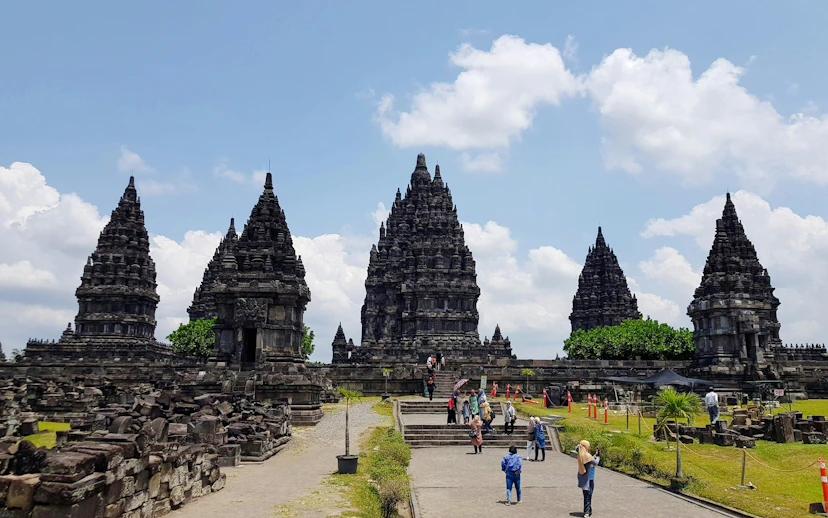
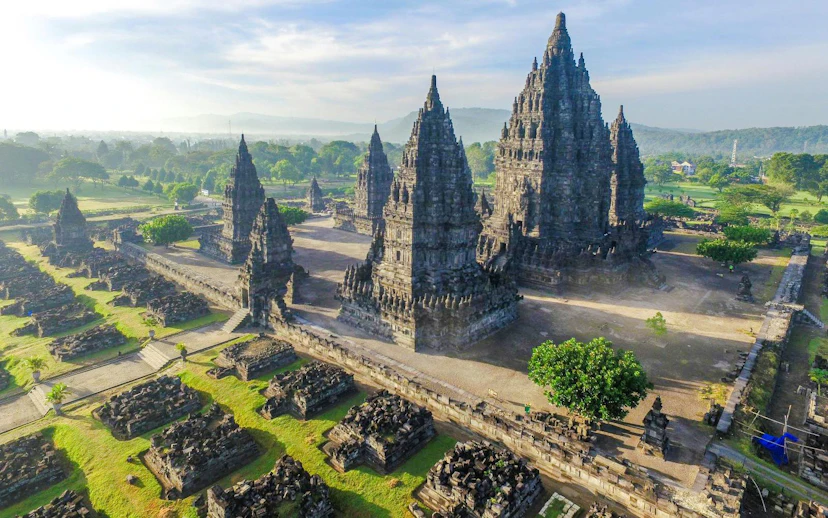
Prambanan is Indonesia’s largest Hindu temple compound, centred on the 47-metre Shiva Temple and its relief-lined galleries. It is an open, spread-out archaeological park rather than a quick indoor attraction: allow 2–3 hours for the core complex, or longer if you add Sewu Temple and the museum. The key planning detail is Monday—the park opens, but the inner Trimurti courtyard does not.
Quick overview: Prambanan Temple at a glance
- When to visit: The official ticket portal lists entry from 06:30 WIB daily. Arrive around opening for cooler conditions and quieter grounds, or around 15:00 for softer late-afternoon light. June–August can be particularly busy.
- Getting in: Standard tickets are date-specific but generally allow flexible daytime entry rather than a fixed arrival slot. Booking ahead is sensible for weekends, public holidays and dates when you plan to attend the Ramayana Ballet.
- How long to allow: Allow 2 hours for the Trimurti temples and Ramayana reliefs, or 3–4 hours to add Sewu Temple, the museum and a more relaxed circuit of the grounds.
- Is a guide worth it? Yes, if you want the Ramayana narrative, Hindu symbolism and the relationship between Prambanan and the nearby Buddhist temples explained. A self-guided visit works well for a shorter architectural visit.
- What many visitors miss: Don't stop at the central Trimurti temples. Sewu Temple and the museum near Lumbung Temple add important context to Prambanan's Hindu–Buddhist landscape.
🎟️ Booking note: Day admission and Ramayana Ballet tickets are separate. If you want to combine the temple visit with an evening performance, check the performance calendar before choosing your visit date.
🕒 Where and when to go
🎟️ Which ticket is right for you?
🗺️ Getting around Prambanan
🛕 What to prioritise at Prambanan
♿ Facilities and accessibility
📍 Nearby sights
Where and when to go
How do you get to Prambanan?
Prambanan is around 16–17 km east of Malioboro, on the Solo–Yogyakarta corridor. Most visitors arrive by Trans Jogja bus, ride-hailing services or taxi, while a private transfer works better when combining Prambanan with other temples.
Address: Jl. Raya Solo–Yogyakarta No.16, Bokoharjo, Prambanan, Sleman, Special Region of Yogyakarta 55571, Indonesia.
By bus: Trans Jogja 1A runs to Prambanan Terminal, followed by roughly a 10–15-minute walk to the entrance.
By car or ride-hail: From Malioboro, the journey usually takes 30–40 minutes in normal traffic. Ask for Candi Prambanan or the main visitor entrance to avoid confusion with the wider Prambanan district.
Getting here from nearby cities
Prambanan is commonly visited as a day trip from Yogyakarta, Solo or Borobudur. Yogyakarta is the easiest base for independent visitors, while Solo and Borobudur make more sense when you're already travelling through Central Java or combining major temple sites.
From Yogyakarta
About 16–17 km away. Allow 30–40 minutes by car or 60–75 minutes by Trans Jogja.
From Solo
About 50 km away. The drive takes roughly 1–1.5 hours, depending on traffic.
From Borobudur
Roughly 50 km away. Allow 1.5–2 hours each way by private car, making this a full-day combination.
Which entrance should you use?
Regular visitors, guided groups and day-ticket holders use the main park entrance from the visitor parking and ticketing area. Follow the appropriate lane after ticket validation.
The key thing to avoid: the Ramayana Ballet venue is separate from daytime temple entry. A performance ticket does not replace your daytime Prambanan admission.
When is Prambanan open?
Temple park: Daily, with the official ticket portal listing entry from 06:30 WIB.
Inner Trimurti courtyard: Open Tuesday–Sunday; closed every Monday for routine maintenance.
Practical final arrival: Aim for 16:30 WIB, as published last-entry guidance can vary.
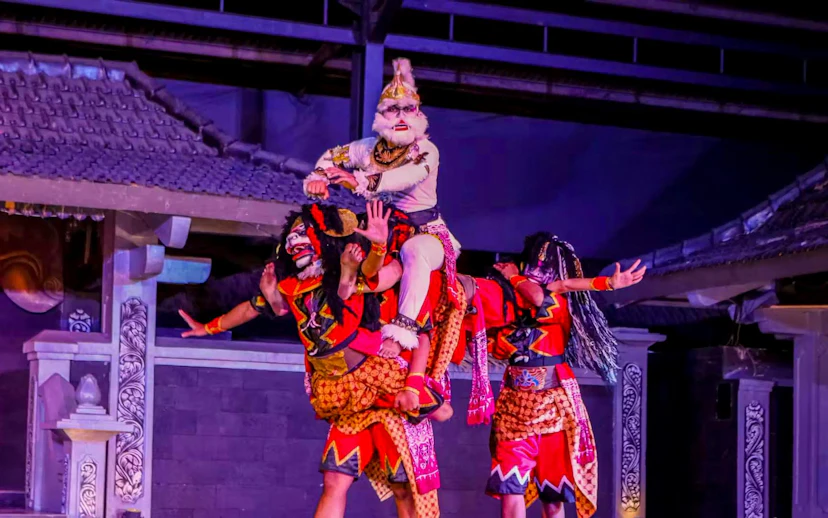
Ramayana Ballet: Separate evening admission, with performances scheduled on selected days depending on the current calendar.
When is it busiest? Weekend mornings, Indonesian public holidays and the dry-season school-holiday period, particularly June–August.
When should you actually go? 06:30–08:00 is the best practical window for cooler conditions and quieter grounds. Around 15:00 works well for softer photography light while still leaving enough time to explore.
How much time do you need?
| Visit type | Route | Duration | Walking distance | Varies |
|---|---|---|---|---|
Highlights only | Entrance → Trimurti temples → Ramayana relief galleries → exit | 1.5–2 hrs | ~1.5 km | See Prambanan’s signature towers and reliefs. Best for a quick visit, but you’ll skip Sewu Temple, Lumbung and the museum. |
Balanced visit | Trimurti temples → Nandi temples → museum → Lumbung → Sewu → exit | 2.5–3.5 hrs | ~3 km | Covers the main Hindu complex plus the surrounding Buddhist monuments and museum, giving you a fuller picture of Prambanan’s religious and architectural history. |
Full exploration | Balanced route + outer shrines, park paths and unhurried relief viewing | 4+ hrs | ~4–5 km | Explore the archaeological park at a relaxed pace, with more time for sculptures, reliefs and lesser-known shrines. Expect exposed paths and uneven surfaces. |
Temple + evening show | Balanced daytime route + break + Ramayana/Roro Jonggrang Ballet | 6+ hrs | Varies | Combines daytime temple exploration with an evening performance. The ballet requires separate admission from daytime temple entry. |
Which ticket is right for you?
Standard entry
Choose standard admission if you want to explore Prambanan at your own pace, from the towering Trimurti temples and Ramayana reliefs to the wider archaeological grounds. This is the simplest option for a self-guided daytime visit.
Guided tour
A guided visit is a better fit if you want context alongside the architecture. A guide can help explain the temple’s Hindu symbolism, Ramayana carvings, history and relationship with the nearby Buddhist monuments.
Prambanan + Borobudur
Choose a combination or day tour if you want to see both of Java’s major UNESCO temple complexes in one trip. This is the most time-efficient option for first-time visitors, but plan for a full day because the sites are around 50 km apart.
Prambanan + Ramayana Ballet
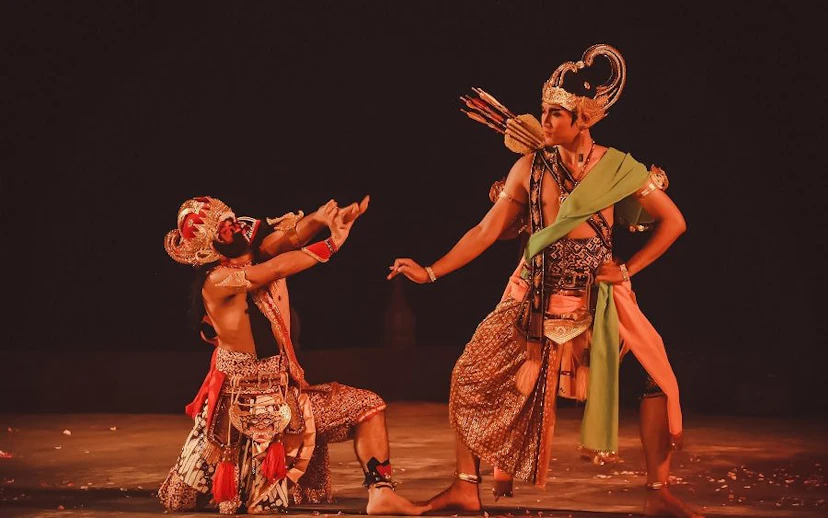
Pair your daytime temple visit with the Ramayana Ballet if you want to experience the story depicted in Prambanan’s reliefs as a live Javanese performance. The ballet is separately ticketed and takes place in the evening on selected dates.
Pro tip: If your priority is seeing the principal temples up close, choose a Tuesday–Sunday visit. The inner Trimurti courtyard is closed for routine maintenance on Mondays.
How do you get around Prambanan Temple?
Prambanan is best explored on foot. The main Trimurti courtyard is compact, but the archaeological park extends north to Sewu Temple, with Lumbung and the museum along the way. A route helps you avoid backtracking and makes it easier to fit the wider Buddhist complex into your visit.
Key areas
Trimurti courtyard: Start with the Shiva, Vishnu and Brahma temples, which form the architectural heart of Prambanan. Allow 45–75 minutes for the towers, sculptures and principal galleries.
Nandi / Wahana temples: Cross to the temples opposite the Trimurti shrines to see the sacred mounts associated with the principal gods and understand the complex's east–west ritual axis.
Ramayana relief galleries: Follow the reliefs around the Shiva and Brahma temples clockwise to experience the narrative in sequence rather than repeatedly backtracking.
Museum Candi Prambanan & Lumbung: Continue beyond the central complex for archaeological artefacts and a transition into the park's Buddhist monuments. Allow around 30–45 minutes.
Sewu Temple: Finish at this major Buddhist complex north of Prambanan. Allow 30–45 minutes, plus walking time, to explore it properly.
Suggested route
Go directly to the Trimurti courtyard, explore the Ramayana reliefs, cross to the Nandi temples, then continue towards Lumbung and the museum before reaching Sewu Temple. This puts the steepest temple exploration earlier and prevents the more distant Buddhist complex from being squeezed out at the end.
Maps and navigation tools
Offline map: Download one before entering. The central temple circuit is intuitive, but signage does not always make the distance to Sewu and the museum obvious.
Signage: Navigation around the main courtyard is straightforward; a downloaded map is more useful once you head towards the outer monuments.
💡 Pro tip: Don't turn back after seeing the three main towers. Sewu Temple is one of the most important stops in the wider complex, and its distance from the central courtyard makes it easy to miss if you don't plan for it.
What should you prioritise at Prambanan?

Shiva Temple
The 47-metre Shiva Temple is Prambanan's centrepiece and tallest structure. Don't stop at the exterior: explore its four interior chambers, including the Shiva Mahadeva and Durga statues. Local tradition associates the Durga figure with Roro Jonggrang.
Where to find it: Centre of the Trimurti courtyard.
Ramayana reliefs
The carved Ramayana reliefs transform the Shiva and Brahma temples into a stone narrative. Follow the panels clockwise to understand the sequence, and look closely rather than treating them as decorative background for photos.
Where to find them: Gallery walls of the Shiva and Brahma temples.
Nandi Temple
Facing the Shiva Temple, the Nandi Temple houses the bull associated with Shiva. Its position is key to understanding the east–west ritual axis that structures the main courtyard.
Where to find it: Directly opposite Shiva Temple.
Sewu Temple
Sewu Temple is a major Buddhist complex within the same UNESCO property, offering a crucial contrast to Prambanan's Hindu architecture. Leaving after the central spires means missing one of the wider site's most significant monuments.
Where to find it: North of the main Prambanan complex.
Museum Candi Prambanan
The museum provides archaeological context through artefacts, statues and material discovered around the site. Visit after the temples so its exhibits can help you understand the architecture and wider religious landscape you've just explored.
Where to find it: Near Lumbung Temple within the archaeological park.
Facilities and accessibility
- 🎒 Lockers: Limited lockers are available near the main entrance. They can fill during coach-tour peaks, so avoid bringing bags or belongings that you may need to store.
- 🚻 Restrooms: Toilets are available near the main entrance, including accessible toilet facilities. It is worth using them before heading deeper into the archaeological park.
- 🍽️ Food and drink: Food outlets are available in the visitor area. Outside food and alcohol are not permitted inside the temple compound, so plan meals before entering or after leaving the protected temple zone.
- 🪑 Seating: Benches and resting points are available around the park, although seating is more limited around the main temple platforms, where steep steps make extended stops less convenient.
- 🅿️ Parking: On-site parking is available for cars, motorcycles and coaches. Parking charges are separate from temple admission.
- Mobility: Prambanan's principal external paths are largely level, allowing wheelchair users to reach the main viewing areas and see the temples from outside. However, the temple interiors are reached by steep, narrow stairs and are not wheelchair accessible.
- Wheelchair assistance: A small electric park vehicle can help wheelchair users travel between the entrance, main plaza and Sewu area. Request assistance at ticketing.
- Public transport: Step-free boarding on public buses and commuter transport can be less reliable, so a private car or taxi is the more practical option for visitors who require easier access.
- Families and strollers: Strollers are suitable for the level park paths, but not for the steep temple platforms. Close supervision is recommended around stairs, worn stone surfaces and relief galleries.
Prambanan works well for families who treat it as an outdoor archaeological visit rather than a full-day temple climb. Younger children can comfortably explore the main towers, open grounds and Sewu Temple without attempting every staircase.
- Time tip: Around 2 hours is realistic with younger children; prioritise the central towers, open grounds and Sewu.
- Strollers: Use them on the level park paths, but expect to leave them before steep temple platforms.
- Engagement tip: Point out the carved Ramayana scenes as you walk through the galleries rather than treating the temples as photo stops.
- Logistics: Bring water and plan rest stops; the archaeological park involves exposed walking and uneven surfaces around some areas.
- Ticketing: Children aged 3 and above require an entry ticket, while children under 3 enter free.
Rules and restrictions
What you need to know before you go
- Entry requirement: Bring your digital or printed ticket for scanning at the gate. Foreign visitors are advised to carry a passport or copy. Standard tickets are date-specific but generally do not require a fixed daytime arrival slot.
- Bags: Limited lockers are available near the main entrance, but they can fill during busy coach-tour periods. Avoid bringing belongings that you will need to store.
- Food and drink: Outside food and alcohol are not permitted inside the temple compound. Food outlets are available in the visitor area, so plan accordingly.
Good to know
- Monday access: The park remains open, but the inner Trimurti courtyard is closed for routine maintenance.
- Temple access: Exterior viewing remains possible, but steep and narrow stairs mean the temple interiors are not wheelchair accessible.
- Parking: Parking is available on site but is charged separately from admission.
Practical tips
- Book ahead for peak dates. Advance booking is particularly useful for weekends, Indonesian public holidays and dates when you want to combine Prambanan with an evening performance. Standard daytime tickets are date-specific but generally allow flexible entry within that day.
- Start with the Trimurti temples. Head straight to the central courtyard when you arrive, while you're still fresh for the steep temple stairs. Save the museum and Sewu Temple for later; this route also reduces the chance of skipping the farther Buddhist complex.
- Avoid Monday if the inner temples matter. The park remains open, but the central Trimurti courtyard is closed for routine maintenance. Choose Tuesday–Sunday if you want closer access to the principal temples and relief galleries.
- Keep your bag compact. Lockers near the entrance are limited and can fill during coach-tour peaks. A small bag is easier to manage across the archaeological park and its uneven surfaces.
- Plan food around the visit. The visitor area has food outlets for snacks and drinks, but outside food cannot be taken into the protected temple compound. If you're attending the evening ballet, leave enough time for a proper meal between the daytime visit and performance.
What else is worth visiting nearby?
Commonly paired with Prambanan
Ratu Boko
Distance: About 3 km — roughly 10–15 minutes by car.
Why people combine them: Ratu Boko's hilltop setting and wide views complement Prambanan's temple architecture. It works particularly well after a morning at Prambanan or before an evening performance. A private transfer is the most practical way to connect the two.
Ramayana Ballet at Prambanan
Distance: On the Prambanan site / nearby performance venues.
Why people combine them: The daytime Ramayana reliefs provide context for the evening's Javanese dance and gamelan performance. It is the most natural same-day pairing, although the ballet requires a separate ticket from temple admission.
Borobudur Temple
Distance: Roughly 50 km — around 1.5–2 hours by car.
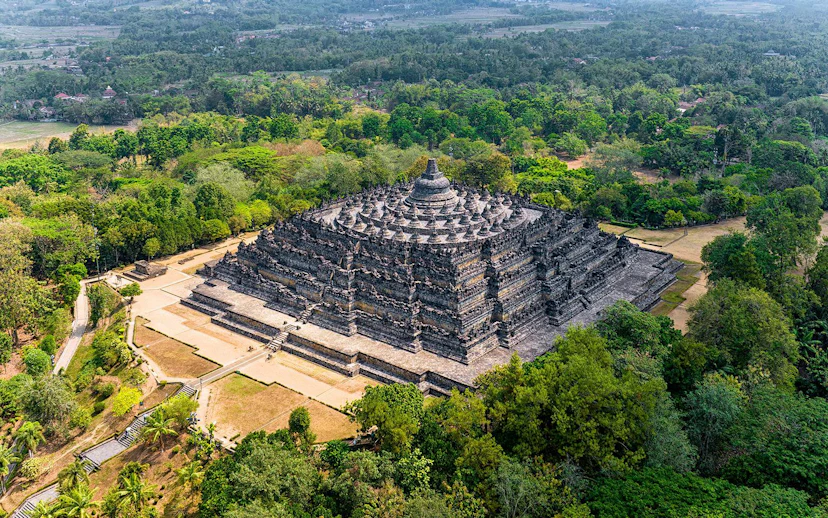
Why people combine them: Borobudur and Prambanan are Central Java's defining Buddhist and Hindu temple complexes. The pairing works best as a full-day itinerary with a private driver or organised tour rather than public transport.
Also nearby
Plaosan Temple
Distance: Near Prambanan — best reached by private car.
Worth knowing: This smaller Buddhist temple complex adds another perspective on the region's intertwined Hindu and Buddhist heritage and is a quieter archaeological stop than the main Prambanan complex.
Kalasan Temple
Distance: On the Yogyakarta–Prambanan route.
Worth knowing: Kalasan is an early Buddhist monument that makes a useful short stop when you're already travelling by private car between Yogyakarta and Prambanan. It is better treated as a route stop than a standalone destination.
Eat, shop and stay near Prambanan Temple
On-site: Food outlets in the visitor area are useful for a quick snack or drink, but they are more of a convenience option than a reason to linger. Food cannot be taken into the protected temple compound.
Better options nearby:
- Prambanan village area: A better choice for a relaxed meal after exploring the temples, particularly if you're not returning immediately to Yogyakarta.
- Yogyakarta: If you're heading back after a daytime visit, eating in the city gives you a much wider choice of restaurants and evening options.
- Between temple and ballet: If you're staying for an evening performance, build in a proper meal break rather than trying to eat during the temple visit.
💡 Pro tip: Don't leave your meal until the gap between the temple and the Ramayana Ballet is too short. Prambanan's daytime route can take several hours, so plan the break deliberately rather than rushing the final stops.
Prambanan visitor area: Souvenir stalls and official retail options sell locally made batik, wayang-inspired crafts and Indonesian heritage books. These are more practical souvenirs than fragile stone replicas, particularly if you're continuing to travel.
The immediate Prambanan area is convenient if you're attending the evening ballet, arriving for opening hours or visiting several eastern-Yogyakarta temple sites. It is quieter and more rural than central Yogyakarta, but has fewer restaurants and evening options.
Price point: Generally more suited to short stays around temple visits than as a full-service tourist base.
Best for: Visitors attending an evening performance, early-morning temple visitors and travellers building a multi-temple itinerary.
Consider instead: Malioboro, Prawirotaman or central Yogyakarta for longer stays, especially if you want easier access to restaurants, transport and the city's wider sightseeing options.
Frequently asked questions about visiting Prambanan Temple
Allow 2 hours for the Trimurti temples and key Ramayana reliefs. Plan 3–4 hours if you want to add Sewu Temple, the museum and a slower walk through the wider grounds. The complex is larger than it appears, so rushing beyond the central temples can mean missing important sites.
Advance booking is most useful for weekends, Indonesian public holidays and dates when you want to combine your visit with the Ramayana Ballet. Standard daytime tickets are date-specific rather than fixed arrival slots, so booking ahead gives you more certainty on busy dates.
Arrive around 06:30–07:00 WIB if you want cooler temperatures and a quieter visit. If you're visiting later, aim to reach the gate by 16:30 WIB at the latest, as published last-entry times vary and arriving late leaves little time to explore the complex.
Small bags are the most practical option. Limited lockers are available near the main entrance, but they can fill during coach-tour peaks. Large photographic equipment also requires advance approval, so avoid bringing bulky gear unless you've arranged permission.
Yes, personal photography is generally permitted. Flash photography, selfie sticks and tripods are restricted, while drones require separate authorisation. Large photographic equipment, including gimbals and telephoto lenses, may also require written approval in advance.
The research does not specify a maximum group size or separate group-entry procedure. For larger groups, particularly coach tours, expect the site and limited entrance lockers to be busier. If you're arranging a guided group visit, confirm the operator's booking and entry requirements in advance.
Yes, particularly for children interested in large temple structures and outdoor exploration. Two hours is a realistic visit with younger children; prioritise the central towers and level park paths rather than every staircase. Children aged 3 and above require tickets, while under-3s enter free.
The principal paths and exterior viewing areas are accessible, and an electric park vehicle can assist between key points. However, the temple interiors and elevated platforms are not wheelchair accessible because they require climbing steep, narrow stone stairs. Plan an exterior-focused route if mobility is limited.
Dress modestly in the temple area, with shoulders and knees covered. If your clothing does not meet the requirement, free sarongs are available at the entrance. This is particularly important if you plan to enter or closely explore the temple structures.